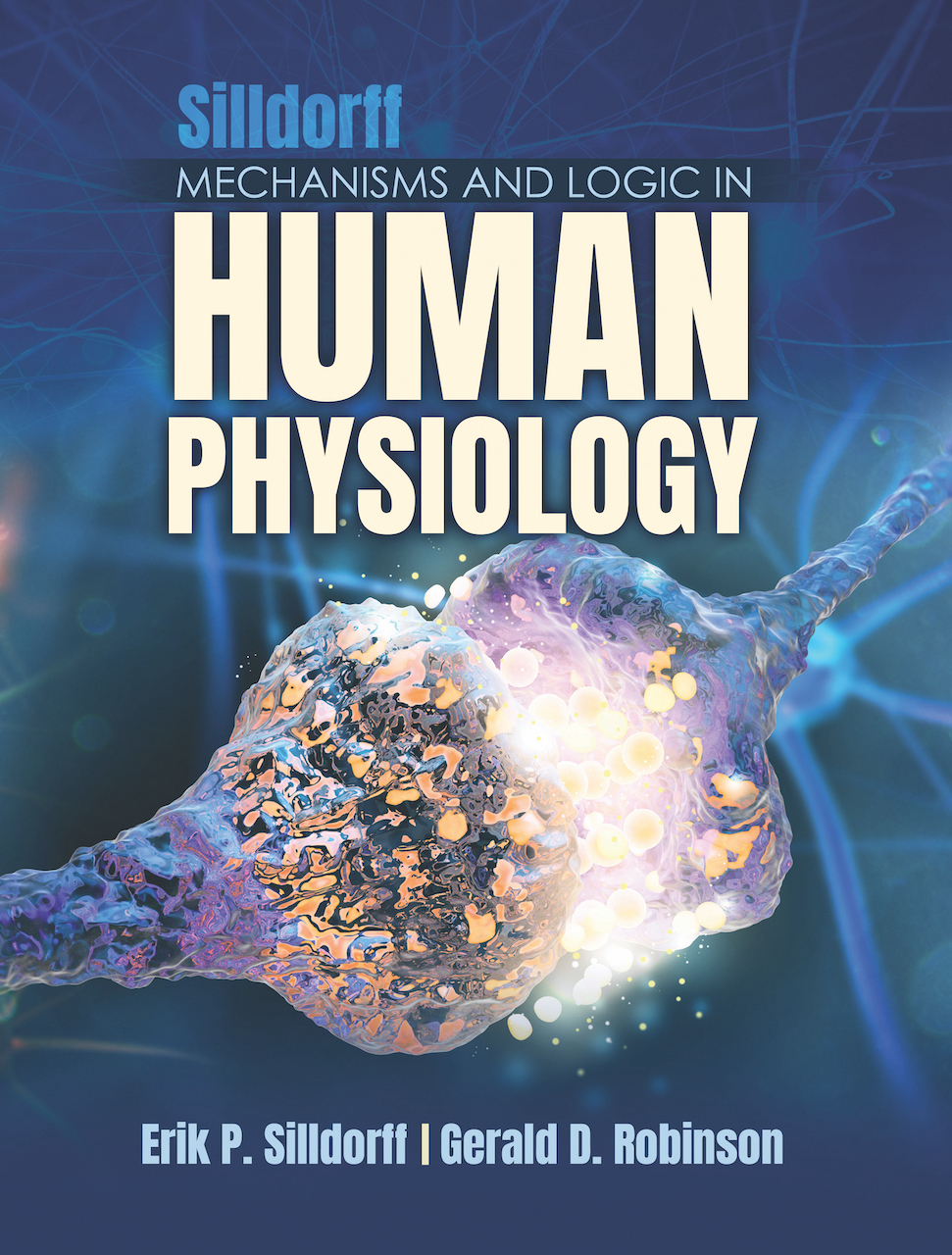
Most physiology courses produce students who know a great deal and can apply very little of it. Mechanisms and Logic in Human Physiology is built on a different premise: that genuine understanding means grasping why each event causes the next.
"Teaching the 'why' behind physiology helps my students know not only when to render treatments, but more importantly, when not to render a treatment which appears to be otherwise indicated."Mustafa Sidik · EMS Clinician and Clinical Educator, Towson University Alumnus
Physiology education has a reasoning problem. This guide names it directly, argues for a better approach, and gives instructors the practical tools to make that change in their own classrooms.
Written for instructors across biology, physiology, and allied health disciplines who believe their students are capable of more than memorization, and want a concrete path toward teaching that way.
Download the Guide (PDF)Content-driven instruction trains students to memorize. Knowledge that isn't anchored to causal understanding is brittle: it holds together long enough to pass a test, then collapses the moment a novel problem appears.
Logic-driven instruction builds causal reasoning from the ground up: big whys that give students a reason to care, and little whys that link each step to the next. Students who learn this way can predict outcomes in systems they have never encountered before.
How to restructure lectures around causal chains. How to design assessments that demand reasoning. How to help students read for logic rather than memorize for coverage. Practical, classroom-ready, and free.
Ask a pre-med student how the kidney regulates blood pressure and they can walk you through the renin-angiotensin-aldosterone system step by step. Ask them what happens to a patient on a low-sodium diet who starts an ACE inhibitor, and many will hesitate. The steps are there. The logic connecting them is not.
The majority of physiology textbooks on the market are, in effect, well-organized encyclopedias: encyclopedic in breadth, yet lacking explanations at the level required for true understanding of the underlying logic. The outcome is an exercise in term recognition and memorization, as opposed to comprehension, integration, and predictive ability.
Lacking an understanding of the framework, the "why" of physiology, students are left only to memorize the "what." When lectures are content-focused and lack conveyance of the essential "why," we are, in a real sense, simply stirring the air in the room.
"True scholarship consists in knowing not what things exist, but what they mean; it is not memory but judgment."
James Russell Lowell · 1819–1891A 2016 Johns Hopkins study estimated that medical errors are the third leading cause of death in the United States. Students who leave physiology courses with brittle, context-dependent knowledge carry that fragility into clinical settings.
Recent reforms to both exams explicitly test application-of-knowledge skills, precisely the skills that memorization-based courses fail to develop. The exam designers have recognized what physiology education has not yet fully acknowledged.
Novice instructors following encyclopedic texts become proficient at sequenced content dispersal: effective at telling, not explaining. Teaching the "why" requires deeper understanding, often acquired over decades. It also requires a textbook built around that goal.
The same topic. Two fundamentally different pedagogical approaches. The difference is not in what is covered. It is in what the student is left being able to do.
The philosopher David Hume argued that genuine understanding requires grasping causal structure: not merely the sequence of events, but the necessity connecting them. This textbook is organized around that principle.
The core unit of explanation throughout the text is what the authors call a triad: a stimulus, causally linked to a mechanism, causally linked to an effect. Each link is defined as physical, biological, or chemical, rather than left as an undefined arrow. Students are asked, repeatedly, to predict rather than recall.
The result is a course in which students develop physiological reasoning: the ability to move through unfamiliar clinical scenarios using the same causal logic that governs every system in the body.
"Aldosterone acts on the distal tubule to increase sodium reabsorption, which increases water reabsorption and raises blood pressure."
"If arterial pressure falls and renal perfusion pressure drops with it, the juxtaglomerular cells are exposed to reduced stretch, a signal they are wired to interpret as insufficient perfusion. The renin they release initiates a cascade whose logic is transparent: each step exists because the previous one created a condition requiring a response."
A full introductory physiology text for pre-med and undergraduate students, built around the principle that physiology is not a collection of facts but a system of causes. It covers all core organ systems while maintaining a consistent commitment to causal explanation and integrative reasoning throughout. A decade in the making, co-authored by two Towson University professors with more than 60 years of combined teaching experience.
The reasoning skills it develops, including predicting physiological responses, tracing causal chains, and recognizing when an apparent indication is contraindicated by the underlying mechanism, are precisely the skills that define clinical reasoning in nursing, PT, OT, paramedicine, and allied health, as well as medicine.
"Teaching the 'why' behind physiology helps my students know not only when to render treatments, but more importantly, when not to render a treatment which appears to be otherwise indicated. I've applied your lessons through lectures in multiple states, podcast episodes, and virtual lectures to students from around the world."Mustafa Sidik · EMS Clinician and Clinical Educator, Towson University Alumnus · Via LinkedIn
"His questions didn't just test memorization. They forced me to think critically and connect concepts, which is exactly how medical school exams are structured. Most of our exams now use clinical case vignettes where you have to catch small clues in the question, think a few steps ahead, and apply what you know. That was something I was already used to thanks to Dr. Silldorff's classes… By far the closest I've seen an undergraduate class come to what you'll experience in medical school."
"Shifting from traditional, slide-heavy lectures to a logic- and drawing-based pedagogy changes the energy in the classroom. Instead of presenting a series of disconnected facts, you're essentially building a puzzle alongside your students. Silldorff and Robinson have developed a text that perfectly aligns with this pedagogical approach. A solid tool kit for any student looking to sharpen their critical thinking and master the subject."
"After taking Anatomy and Physiology with Dr. Erik Silldorff, I finally began to understand what it means to think like a scientist. His textbook does far more than present information. It teaches students how to reason through it. Rather than feeling fragmented, the content unfolds like a cohesive story, allowing concepts to build naturally upon one another. Not only did this course significantly strengthen my preparation for the MCAT, but it also gave me confidence moving forward into graduate-level education. Not in the fleeting way of Bill Nye the Science Guy, but in a way that lasts, because the material sticks, invites discussion, and encourages continued curiosity."
"Instead of memorizing things and then regurgitating them onto the page, I am tested in a way that applies the learned content. While it is more challenging, it makes me feel more prepared for my future."
"This course focuses on understanding the 'why' in physiology and has therefore strengthened my application skills significantly. The mode of instruction, writing on the board, allows information to be presented and explained in logical steps rather than being presented all at once, as it is with PowerPoints."
"Dr. Silldorff is an extremely knowledgeable professor who teaches students to use applied reasoning rather than memorizing facts."
"I like how Dr. Silldorff set up the class in a way that challenged us to think our way through any problem instead of relying on memory. I feel like this class has prepared me for real world situations better than other classes I have taken."
The pedagogical framework in this book is not simply a teaching philosophy. It is a documented approach with a peer-reviewed evidence base, published twice in Advances in Physiology Education, the American Physiological Society's journal dedicated to physiology pedagogy. Both papers are open access and free to all readers.
Application-of-knowledge skills are highly valued in clinical medicine, as indicated by recent changes to licensure and entrance exams for nursing and physician programs. This paper argues that all content dissemination can and should provide for the development of critical thinking skills. It also cites a Johns Hopkins study estimating that medical errors are now the third leading cause of death in the United States.
Read free ↗Introduces the triad framework: stimulus causally linked to mechanism causally linked to effect, as the teachable unit of physiological reasoning. Defines critical thinking as "the use of information (the parts) and an understanding of the mechanistic frameworks they are a part of (the process) to predict outcomes." Includes causal loop diagrams showing the difference between undefined and defined causal links.
Read free ↗"True scholarship consists in knowing not what things exist, but what they mean; it is not memory but judgment."James Russell Lowell · 1819–1891
Adopting a new text is one thing. Redesigning how you teach is another. The resources below are offered freely to any instructor interested in building a physiology course around higher-order cognitive skills, whether or not you are currently using this book.
Builds the causal reasoning skills that the MCAT and clinical rotations demand, and that memorization-based courses consistently fail to develop. Students arrive at medical school already thinking like clinicians.
Clinical reasoning, including interpreting patient presentation, anticipating physiological responses, and recognizing contraindications, is the core competency every allied health program aims to develop. This text treats physiology as the foundation of that reasoning.
Prehospital settings demand rapid physiological reasoning under pressure. Practitioners who understand the causal logic of physiological systems are better equipped to recognize atypical presentations and make sound decisions when the standard protocol doesn't obviously apply.